

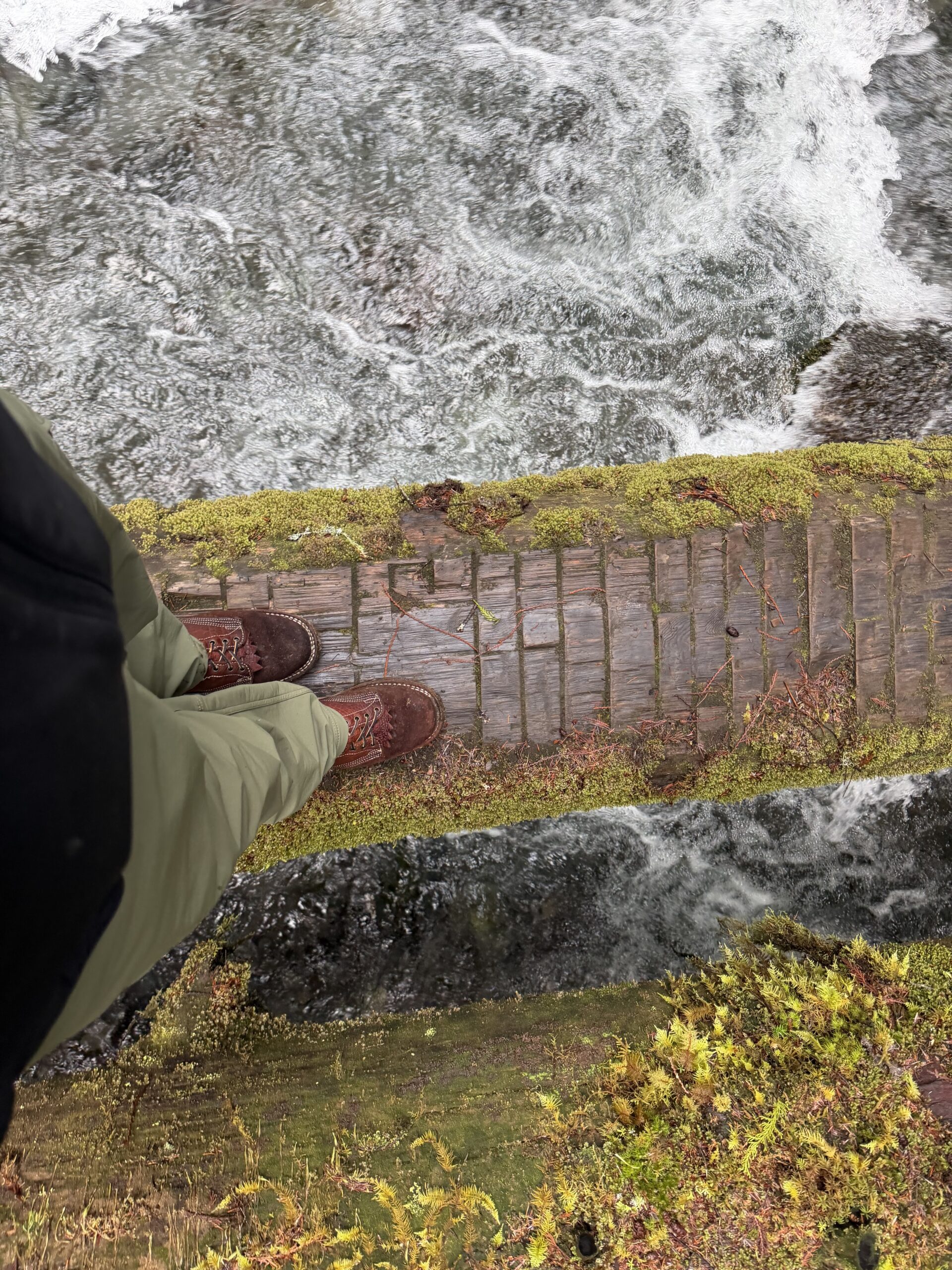
I recently decided to take my JK Boots OT Canyon Bison boots out of the house and into the wild for a proper field test. I have had them for about three months, mostly for casual wear, but I wanted to see how they would perform during my traditional post-Christmas camping trip on the Olympic Peninsula.
I headed out to the peninsula for two nights. The plan was simple: some car camping, a drive to the trailheads, and a few miles of testing on varied terrain. The weather was typical for the season, hovering just above freezing during the day and dropping into the mid-20s (°F) at night.
Here is how the OT Canyon Bisons held up to ice, mud, freezing water, and the rugged PNW trails.
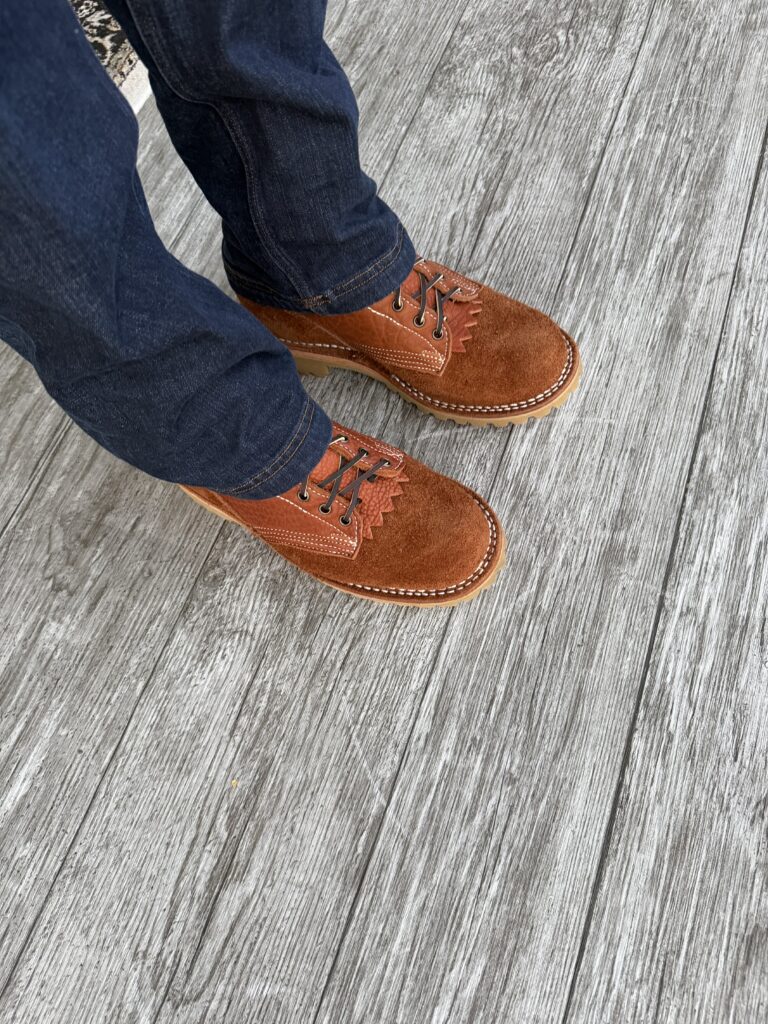
The Specs: What Am I Wearing?
Before we get into the trail report, here is the breakdown of the specific build I’m wearing:
- Model: JK Boots OT (Overtime) Canyon
- Leather: Bison (Red/Brown tone)
- Size: 9 5E
- Sole: Honey Vibram
- Age: 3 months (mostly house wear and light camping prior to this)
- Treatment: Obenauf’s Heavy Duty LP
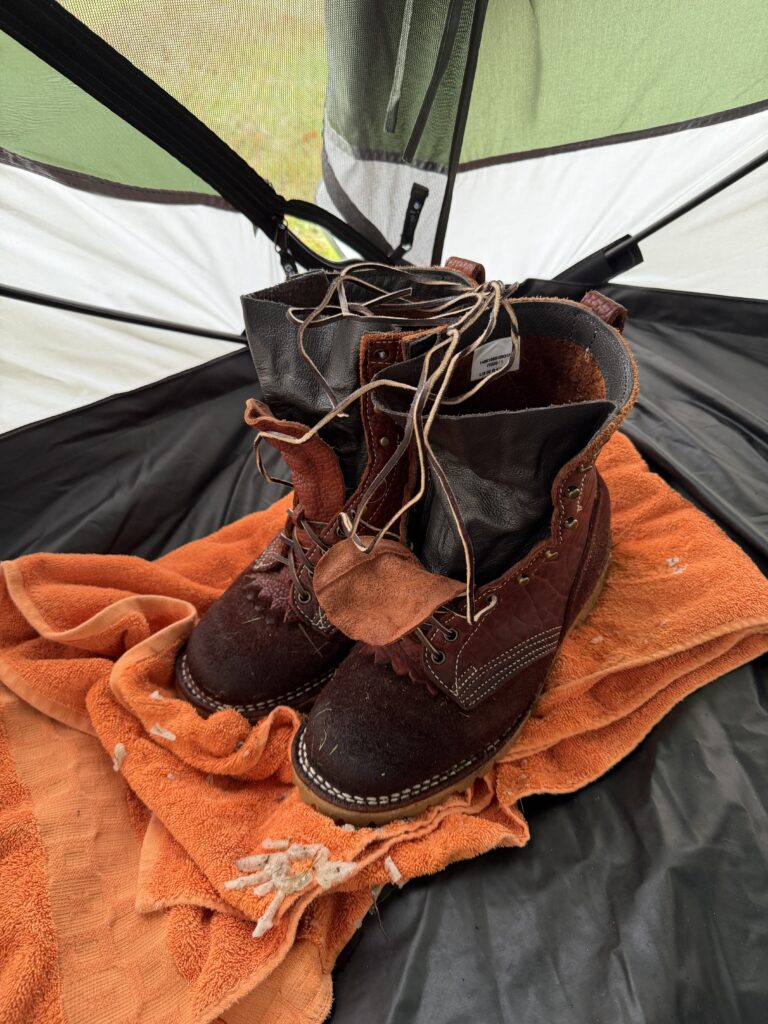
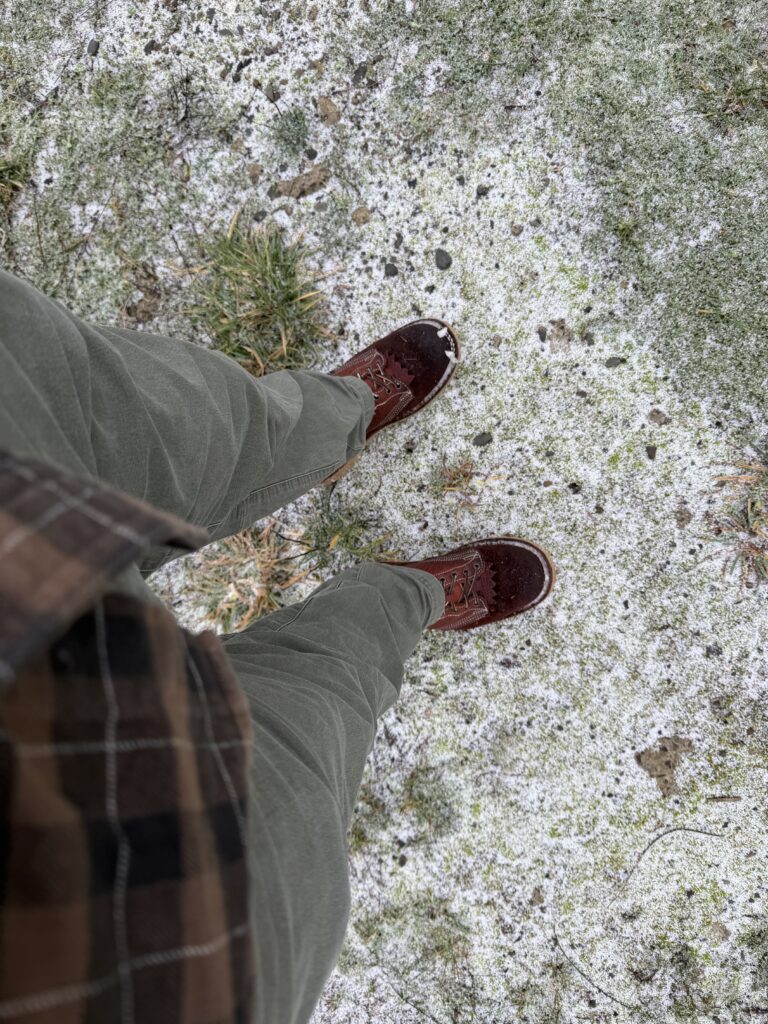
I have treated these with Obenauf’s oil, which significantly darkened the leather but, as you’ll see, provided excellent water resistance.
The Hike: Grip and Stability
The trails on the Olympic Peninsula can be unforgiving. We encountered a mix of frozen dirt, mud, and snow. I was particularly interested to see how the Honey Vibram soles would handle the “slipperiness” of the PNW winter.
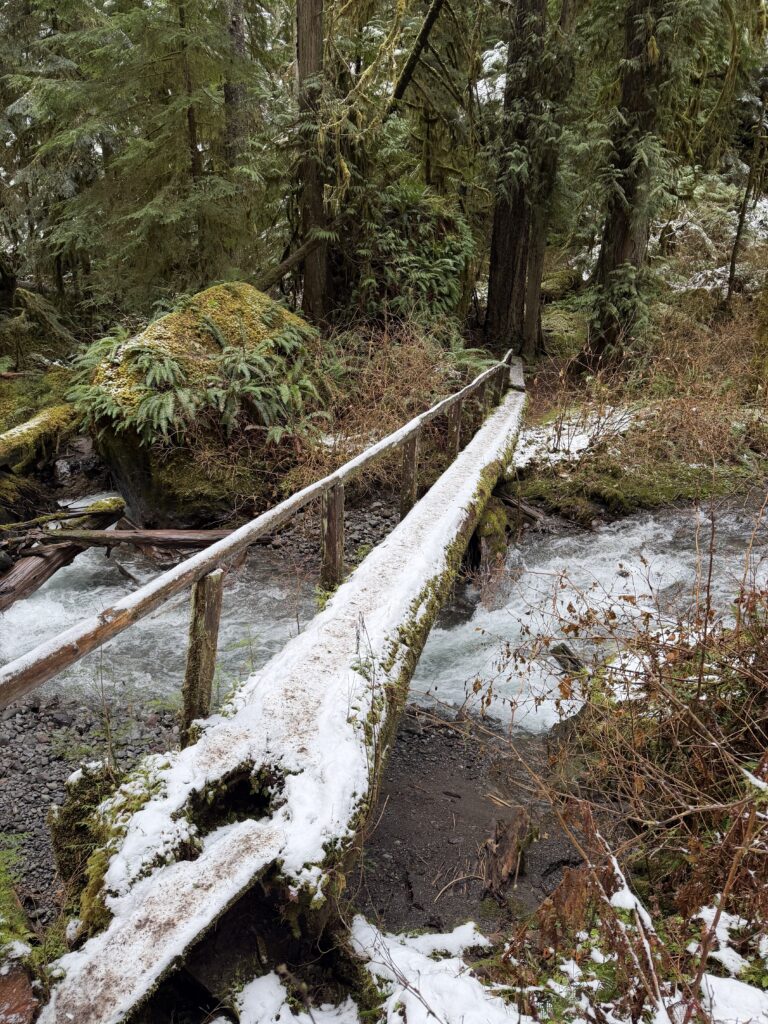
The boots performed exceptionally well. The Honey Vibram compound is known for being a bit softer and grippier than the standard black Vibram 100, and it showed. Whether I was scrambling over rocks or crossing icy log bridges laid across the river, I felt planted.
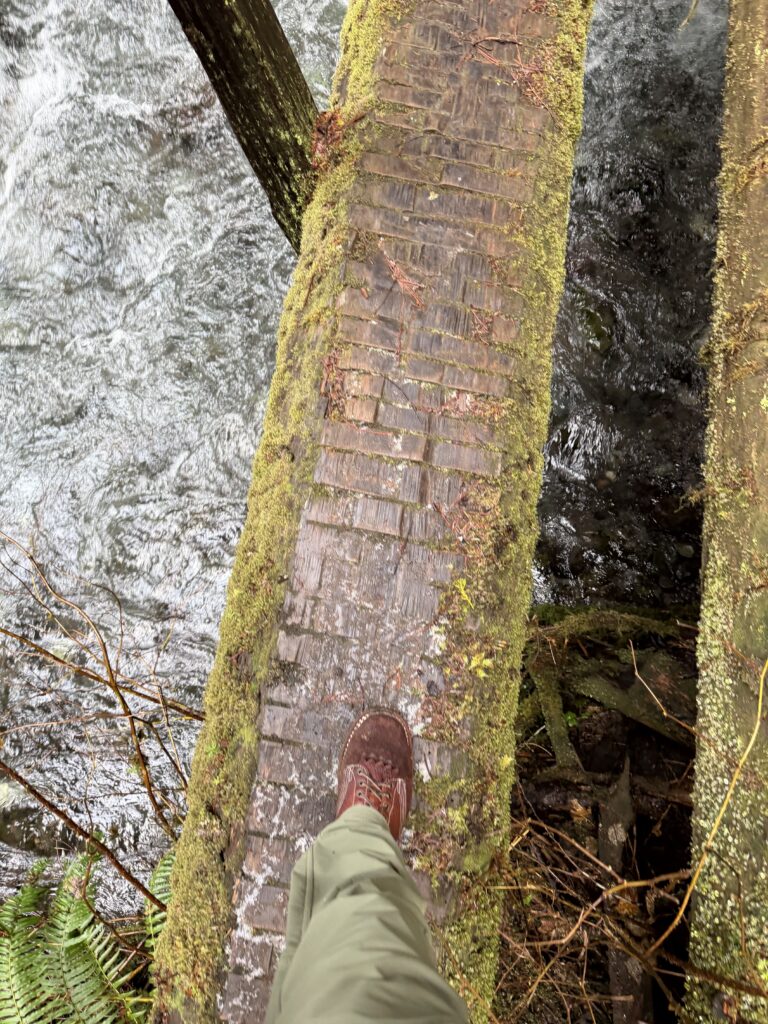
The ankle support is where these boots really shine compared to standard hiking shoes. When navigating uneven terrain or going downhill, the secure fit around the ankle provided a level of confidence I just don’t get from lower-cut hikers.
Water Resistance: The Flooded Trail Test
Midway through the hike, we ran into a section of the trail that was completely flooded. There was no way around it so I had to wade ankle-deep through flowing water.
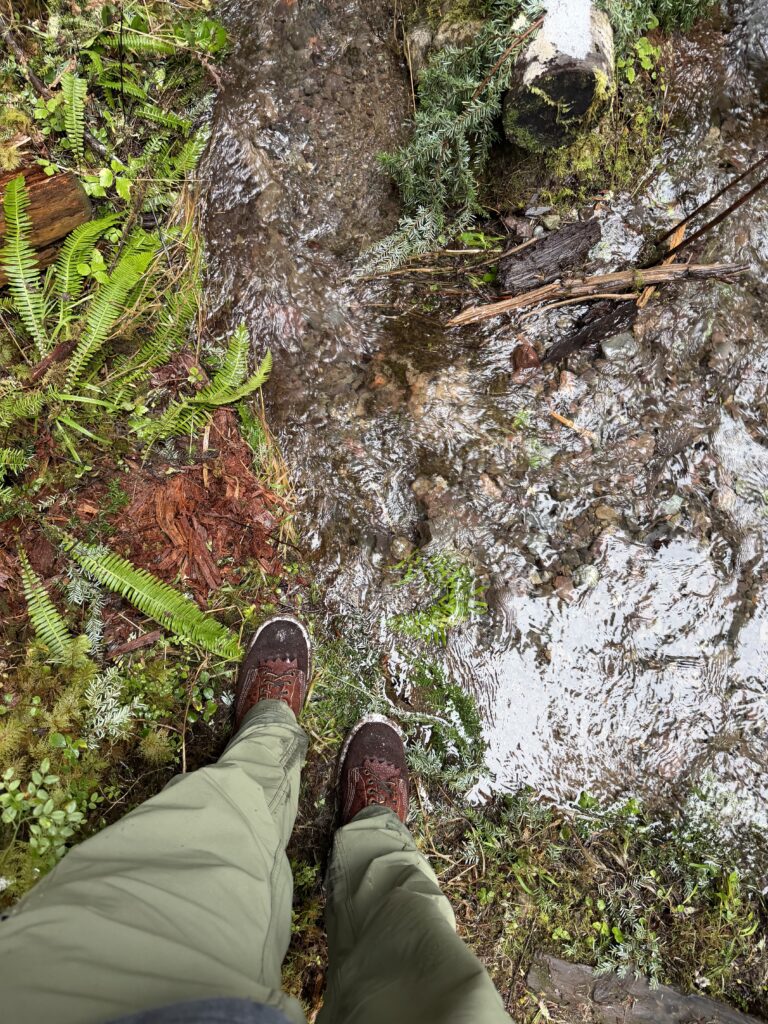
This was the ultimate test for the Obenauf’s treatment and the stitch-down construction. I’m happy to report that while the leather definitely wetted out on the surface, no water seeped through to my socks.
When we got back to the campsite, my feet were a bit sweaty which is common after going on a 7 mile hike, but no external water had made its way inside.
Fit and Sizing: JK vs. Nicks/Whites
Sizing handmade PNW boots can be tricky, so here is a reference point for those of you trying to dial in your fit.
My JK Size: 9 5E
My Size on 55 Last (Nicks/Whites): 9.5 FF
The JK 5E width accommodates my wide feet very well. The toe box is spacious, and I didn’t experience any dreaded “toe rub” even when hiking down steep grades.
The ankle fit is secure. Generally, I have about 1-2 fingers of width in the lace area (the “lace gap”). It might close up a bit more as they continue to break in, but I don’t think it will fully touch. To me, these are just a tad too wide, but I prefer it that way. It gives me the option to wear thick wool socks for winter camping without cutting off circulation.
Comfort and Break-in: The Bison Factor
If you are debating between Bison and standard Steer leather, here is my take.
The Bison leather is incredibly supple. There was almost no break-in period. They felt natural on my feet after just the first 10-15 hours of casual wear. This is a huge advantage over the brutal break-in periods of some other heavy-duty work boots.
However, that softness comes with a trade-off. I sometimes don’t love how soft they are as it makes me slightly nervous for heavy work. If I were doing serious construction or forestry work, I would stick to regular steer leather for that extra rigidity and armor-like protection. But for hiking, camping, and general outdoor use? The Bison is fantastic.
Quality and The “Stitching Issue”
I want to be honest about the build quality. There is a slight stitching issue on this pair. With the recent chatter about JK’s quality control, I was a little concerned.
However, I reached out to JK Customer Support, and their response was immediate and helpful. They offered to have me send the boots back for a warranty repair, free of charge. I will likely send them in after this post goes live.
While the issue shouldn’t have happened, the fact that their support stood behind the product after just a few email replies is a massive plus in my book.
The Verdict
Are the JK OT Canyon Bisons worth it?
Given that JK Boots typically come in at $100-$150 lower than most other legacy PNW brands, I think they are a great value. They are slowly becoming my dedicated hiking boots because of the superior support and the grip of that Honey Vibram sole.
Despite the minor stitching hiccup, the performance in the field, keeping my feet dry in a flooded trail and upright on icy logs, speaks for itself. If you are looking for a heavy-duty hiker that skips the painful break-in, the Bison option is a winner.
Pros:
- Zero break-in time (Bison leather).
- Honey Vibram sole is excellent in wet/icy conditions.
- Good value price point.
- Responsive customer support.
Cons:
- Minor QC issues (swiftly handled by warranty).
- Bison might be too soft for heavy work.
Leave a Reply